
rediffGURU Dr Vinod Kumar, a kidney health specialist at the Aster RV Hospital, Bengaluru, offers advice on how to keep your kidneys healthy and functioning well.

Policy owners need to avoid errors on their part to prevent claims from being denied.

Kidney patients have a reason to cheer as Nadiad - a sleepy town lying between Ahmedabad and Vadodara, would soon have a robot conducting urology surgeries on them.

Tamil Nadu Health Minister Ma Subramanian on Wednesday attributed the mushrooming of COVID-19 clusters in the state and spike in cases in the city to students coming from other states, particularly North.
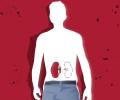
rediffGURU Dr Vinod Kumar offers advice on how to take care of your kidneys.

In a statement in the House, the chief minister said air ambulance service would be started at a cost of Rs 10 crore to transport critical patients to hospitals.

The papers noted that the 5G network is built on easily accessible and open Internet protocols and it inherits all the vulnerabilities of previous generations which make it vulnerable to cyber-attacks and compromising the security of the entire system.

rediffGURU Dr Vinod Kumar, a consultant kidney health specialist at Aster RV Hospital, Bengaluru, offers advice to improve the health of your kidneys.

rediffGURU Dr Vinod Kumar, a consultant kidney health specialist at Aster RV Hospital, Bengaluru, tells you how you can take care of your kidneys.

'We are calling companies to set up assembly plants for mobile phones while all the components are imported.' 'Only the last turn of the screwdriver is done here. And you call it self-reliance, Atmanirbharta, etc.' 'Unless you invest in research, you will not climb up the ladder. But this government is happy getting sub-contract work.'

Huawei came under a cloud after allegations that the firm's electronic and telecom devices helped China spy on US corporations and agencies.
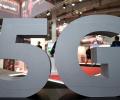
The move comes against the backdrop of the US and some of its allies banning the purchase of Chinese telecom gear over security concerns and pressuring other countries to follow suit.

Pricing is a vital part of strategy to take high speed broadband to 265 million homes

The frustration for aspirant Olympians has been palpable and athletes like table tennis player Sathiyan Gnanasekaran have been forced to innovate to stay sharp during the lengthy lockdowns.

The merits and demerits of the telcos' 5G strategy however is clearly dependent on the financial muscle of players, reports Surajeet Das Gupta.

The group wants to expand its drug store chain.
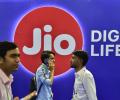
Reliance Jio's decision to acquire 700 MHz in combination with the possible use of an advanced standalone (SA) 5G network could give it an edge over its rivals, according to most analysts. The dissenters argue that the stiff price tag touching Rs 40,000 crore to grab 10 MHz of spectrum in 700 to provide coverage for its SA 5G network which offers ultra-low latency (unlike non-standalone or NSA), has a long way to go in India in terms of finding use cases that can be monetised. Globally, 700 MHz is a pivotal band which provides huge coverage, indoor penetration (especially useful in India where walls are thick) and is already considered by the European Union to be the 'pioneer band' for 5G, with 3.5 GHz and 26 GHz, both of which were auctioned in India recently.

The Big Two telecom companies have accelerated their moves towards this next-gen technology, though they have chosen very different routes to getting there.
It came as a surprise to all stakeholders - competing telecom companies (telcos), most analysts and even the government's internal projections on revenues from the 5G auctions. Reliance Jio disrupted all calculations by paying a stiff Rs 40,000 crore to buy 10 MHz of spectrum in the 700-MHz band, globally considered a key band for efficient 5G service coverage, along with the default 3.5 GHz band and the ultra-high speed and low-latency millimetre band of 26 GHz band. So what made Jio pay almost 45 per cent of its total spend in this auction for the 700 MHz band - much more than what it rustled up even for the 3.5 GHz band?

Describing neonatal and maternal mortality rates as a matter of grave concern, Prime Minister Narendra Modi on Saturday said his government wanted to effectively use its 'Make in India' and 'Digital India' campaigns to reach healthcare to the country's poorest of the poor.

Here's a recap of all the events that shaped the world from the previous week.

Technology became more personal in 2015.

This week's digest of weird, true and funny news from around the world
Several factors have held India back. One is DoT policy somersaults and lack of clarity on whether to or not to ban Chinese gear makers.
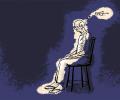
'Dementia is going to be a huge challenge for hospitals, doctors, nurses, physiotherapists, health workers and family members.'

'If the almost literally heart-stopping Suez block has any positive outcome, it is to be hoped that it will accelerate the setting up of a fab (perhaps Taiwanese) in India,' asserts Rajeev Srinivasan.

'The best way to face cancer is to get it diagnosed, staged and identify the best which line of management.'

A superb 83rd minute free-kick from captain Neymar gave Brazil a winning start under new coach Dunga as they beat Colombia 1-0 in a fiercely contested friendly on Friday.

Sofia Goggia carved up the Jeongseon slope 'like a Samurai' to win the women's downhill on Wednesday and leave American Lindsey Vonn with a bronze medal in her final run in the marquee event of Olympic Alpine skiing.
